Securing high-risk electrical zones demands continuous vigilance. Server rooms, breaker panels, and heavy machinery operate around the clock. These environments present persistent, unpredictable fire hazards. Facility managers frequently seek passive, 24/7 fire suppression tools. The Fire Extinguisher Ball emerges as an intriguing, heat-activated option. You simply install it near a risk area. It triggers automatically without manual intervention. Yet, electrical (Class C) fires introduce unique operational hurdles. Facilities need strictly non-conductive agents to prevent electrocution. They must also minimize irreversible equipment damage during suppression. Furthermore, commercial environments face rigid safety compliance standards. Can this spherical device genuinely satisfy these critical demands? This article provides an objective, evidence-based evaluation. We will determine if a fire extinguisher ball is a viable, safe, and compliant solution for your electrical fire risks.
Key Takeaways
Supplemental, Not Primary: Fire extinguisher balls do not replace traditional, UL-listed fire extinguishers required by NFPA and OSHA standards.
Compliance Risks: The U.S. Consumer Product Safety Commission (CPSC) has issued explicit warnings regarding certain uncertified fire extinguisher balls failing to extinguish fires.
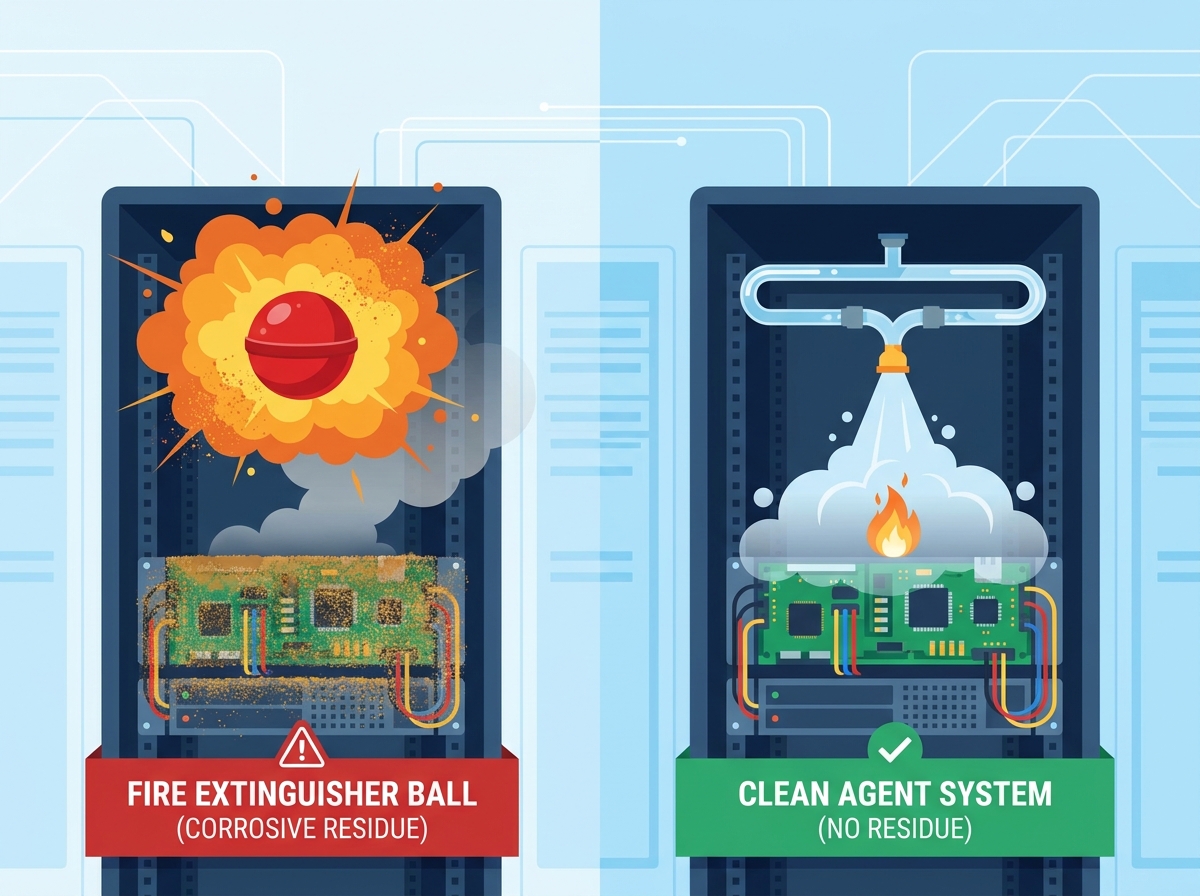
Equipment Damage: Many balls use dry chemical powders (like Monoammonium Phosphate) which, while non-conductive, are highly corrosive to sensitive electronics and PCBs.
Best Use Case: They serve best as localized, secondary suppression in enclosed, low-value electrical junctions rather than critical IT infrastructure.
1. How the Fire Extinguisher Ball Operates in Electrical Environments
Activation Mechanics
Understanding the activation process reveals both the strengths and limitations of this device. A Fire Extinguisher Ball relies on a completely passive trigger mechanism. The outer casing features a network of sensitive fuses. These fuses require direct exposure to open flames or extreme heat to detonate. Typically, activation temperatures range between 160°F and 180°F. When flames lick the exterior, the internal black powder charge ignites. This causes the device to burst open. The explosion scatters the suppression agent rapidly across the immediate vicinity. You do not need to pull a pin or squeeze a handle. The device operates autonomously.
Suppression Agent
The internal payload determines how effectively the device fights a fire. Most traditional models contain standard dry chemical powder. This powder usually consists of monoammonium phosphate. It carries an ABC rating. This rating means it handles ordinary combustibles, flammable liquids, and energized electrical fires. However, newer models incorporate advanced aerosol technology. Aerosol variants release a ultra-fine mist rather than a heavy powder. This mist acts similarly to clean agents. It attempts to suppress the fire while leaving less residue behind. Both agents seek to neutralize the threat quickly.
Class C Efficacy
Electrical fires fall under the Class C designation. Fighting these fires requires non-conductive materials. Spraying water on a live circuit invites fatal electrocution. The dry chemical powder inside the ball is inherently non-conductive. When the device bursts, it violently disperses the powder into the air. The chemical cloud settles over the flames. It interrupts the chemical chain reaction of the fire triangle. It separates the fuel from the oxygen. Importantly, the agent does not conduct electricity back to the source or to bystanders. This non-conductive trait makes the agent theoretically safe for high-voltage environments.
2. Evaluation Criteria: Features vs. Real-World Outcomes
Coverage Volume vs. Reality
Manufacturers often advertise impressive coverage volumes. They claim a single device can protect 360 degrees of space. They provide cubic-foot ratings assuming an empty, unhindered room. Real-world electrical environments look vastly different. Dense server racks and crowded breaker panels obstruct airflow. When the ball detonates, internal cabinet walls block the powder. Wires and cooling fans disrupt the dispersion pattern. Consequently, the chemical agent might never reach the actual source of the spark. A hidden fault behind a steel divider remains largely unaffected. The advertised cubic-foot rating rarely translates to densely packed commercial cabinets.
Response Time
Speed is everything when battling electrical fires. Unfortunately, the passive fuse design presents a significant delay. The device cannot detect smoke. It cannot detect a slow rise in ambient temperature. It strictly requires open flames or intense, localized heat to burst. Electrical faults often smolder for hours. Wire insulation melts slowly. Smoke fills the cabinet long before a visible flame erupts. During this smoldering phase, the device does nothing. By the time an open flame finally detonates the casing, the electrical fire has likely caused severe damage. The response time lags behind advanced smoke-detection systems.
Collateral Damage
Extinguishing the fire solves only half the problem. The aftermath introduces severe complications. Standard ABC dry chemical powder is highly corrosive. Monoammonium phosphate aggressively attacks sensitive electronics. When the dust settles on untreated wire insulation, cooling fans, and motherboards, it clings tenaciously. If ambient humidity is present, the powder reacts. It forms an acidic compound. This compound rapidly corrodes printed circuit boards (PCBs). The cleanup process is notoriously difficult. Facility teams must meticulously vacuum and scrub every crevice. Often, the corrosive dust renders the surviving IT equipment completely unusable. The collateral damage sometimes exceeds the initial fire damage.
3. Compliance, Safety, and the CPSC Warning
The Regulatory Gap
Commercial facilities must adhere strictly to building codes. Regulatory bodies mandate certified fire protection equipment. A glaring issue arises here. The vast majority of these spherical devices lack Underwriters Laboratories (UL) certification. They also lack standard National Fire Protection Association (NFPA) approvals. NFPA 10 outlines the standard for portable fire extinguishers. It requires manual operation, verifiable pressure gauges, and specific performance testing. A passive, explosive device fails to meet these criteria. This regulatory gap means safety inspectors will not recognize the device as a legitimate fire extinguisher. It cannot replace mandatory wall-mounted units.
CPSC Intervention
Consumer protection agencies have taken notice of this regulatory void. The U.S. Consumer Product Safety Commission (CPSC) actively monitors uncertified fire safety products. The CPSC has issued explicit warnings regarding certain brands. They highlighted severe structural and safety failures. Some tested units simply failed to suppress the fire. Others presented serious injury risks. The explosive force can turn plastic casing fragments into dangerous projectiles. The acoustic shock of the blast can disorient personnel. These documented failures underscore the inherent risks of relying on uncertified suppression methods in critical environments.
Insurance and Liability
Deploying non-certified equipment carries heavy commercial implications. Insurance providers assess facility risk based on recognized safety standards. Installing an uncertified device will not lower your commercial insurance premiums. In fact, it might complicate your liability coverage. If a fire destroys a server room, investigators will scrutinize your suppression strategy. If they find you relied on an unapproved device as your primary defense, your claim might face denial. Furthermore, local fire marshals may cite your facility for safety code violations. You must treat these products purely as experimental, supplemental tools.
4. Fire Extinguisher Balls vs. Commercial Clean Agent Systems
Clean Agent Tubing (e.g., FM-200 / Novec 1230)
Modern facilities often utilize clean agent tubing for localized electrical protection. Engineers install pneumatic, heat-sensitive tubing directly inside electrical panels. When a fire breaks out, the heat weakens the tube. It ruptures at the exact location of the flame. It then releases a clean agent like FM-200 or Novec 1230. Unlike dry chemical powder, clean agents leave absolutely zero residue. They are electrically non-conductive and perfectly safe for sensitive IT equipment. The tubing targets the exact source of the fire instantly. It provides surgical precision compared to the indiscriminate blast of a powder-filled casing.
Automated CO2 Systems
Automated CO2 systems provide another commercial alternative. These systems flood an enclosed cabinet with carbon dioxide. The CO2 rapidly displaces oxygen. It suffocates the fire efficiently. CO2 systems release the gas in a highly controlled manner. They use precision valves and nozzles. This controlled release contrasts sharply with the explosive dispersion of a ball. An explosive blast scatters debris and dust everywhere. A CO2 system gently but rapidly suppresses the flame without creating a massive mess. CO2 systems also integrate directly with building smoke detectors for immediate response.
Table: Comparison of Electrical Enclosure Fire Suppression Methods
Feature
Extinguisher Ball (ABC Powder)
Clean Agent Tubing
Automated CO2 System
Activation Trigger
Open flame (160°F–180°F)
Heat-sensitive pneumatic tube rupture
Smoke or heat detector linked to panel
Equipment Damage
High (corrosive powder residue)
None (leaves no residue)
None (gas dissipates)
Certification Status
Usually Uncertified
UL Listed / FM Approved
UL Listed / NFPA Compliant
Dispersion Method
Explosive blast
Targeted localized spray
Controlled gas flooding
Cost vs. Reliability
The primary appeal of the spherical device is its low upfront price. You can purchase them cheaply and toss them into a room. However, this low cost sacrifices reliability. Engineered suppression systems require professional installation. They involve complex piping and control panels. Their initial price tag is significantly higher. Yet, engineered systems provide unmatched predictability. They guarantee performance when disaster strikes. They protect millions of dollars in IT infrastructure securely. Choosing an uncertified, cheap device over a reliable clean agent system gambles with your facility's operational continuity.
5. Implementation Considerations and Deployment Risks
Risk of Accidental Deployment
Industrial settings are dynamic environments. Vibrations, movement, and accidents happen daily. One major concern is accidental deployment. If a worker drops the device from a significant height, the impact could rupture the casing. Industrial forklifts or heavy machinery create intense vibrations. Continuous vibration might degrade the internal fuses over time. Furthermore, placing the unit near high-heat machinery might trigger a false alarm. If ambient temperatures spike unusually high, the device might detonate prematurely. A false alarm floods the area with corrosive powder, causing unnecessary downtime and severe cleanup headaches.
Placement Strategy
If you decide to test this product as a strictly supplemental measure, placement is crucial. You must strategize the mounting location carefully. Follow these mounting guidelines:
Target High-Risk Nodes: Mount the bracket directly above known high-risk junctions or prone overheating spots.
Maintain Clearance: Ensure unobstructed space around the unit. Do not bury it behind thick wiring bundles.
Avoid Critical IT Racks: Keep them away from high-value servers. Reserve them for low-value, isolated mechanical rooms or heavy equipment housings.
Secure the Bracket: Fasten the holding basket tightly to prevent accidental dislodging during routine maintenance.
Shelf Life and Maintenance
Manufacturers generally advertise a 5-year maintenance-free lifespan. This sounds convenient initially. You install it and forget it. However, this "maintenance-free" aspect is a double-edged sword. You have no way to verify its operational readiness. Traditional extinguishers feature pressure gauges. You can visually confirm they hold a charge. The ball is a sealed unit. You cannot inspect the internal pressure. You cannot verify if the chemical agent has clumped or degraded. Once the five-year mark passes, you must discard and replace the unit entirely. You operate on blind faith until a fire occurs.
Shortlisting Logic
Decision-makers need a definitive framework before adopting this technology. Use this checklist to determine your path forward:
Assess the Equipment Value: Is the electrical equipment highly sensitive and expensive? If yes, bypass this product and use clean agents.
Check Compliance Needs: Does your local fire code mandate UL-listed automatic systems? If yes, this device will not pass inspection.
Evaluate the Environment: Is the area enclosed and rarely accessed by personnel? This makes a localized explosion slightly less hazardous.
Determine the Primary Defense: Do you already have NFPA-compliant manual extinguishers and sprinklers in place? If no, fix your primary defense first.
Review Cleanup Capabilities: Does your facility have the resources to mitigate corrosive powder damage rapidly? If no, avoid dry chemical solutions.
Conclusion
A fundamental disconnect exists between the marketing appeal of the Fire Extinguisher Ball and the strict realities of commercial safety. The idea of a cheap, automatic suppression tool is undeniably attractive. However, commercial electrical fire suppression requires precision, non-corrosive agents, and rigorous regulatory compliance. These uncertified devices fail to meet these demands. They use corrosive powders. They require open flames to trigger. They lack NFPA and UL recognition. While technologically interesting, they remain a strictly secondary, uncertified measure. We highly recommend consulting with a certified fire protection engineer. They can properly audit your electrical enclosures. They will guide you toward NFPA-compliant, reliable automatic clean agent systems.
FAQ
Q: Will a fire extinguisher ball damage my servers or electronics?
A: Yes, it likely will. Most models use ABC dry chemical powder, typically monoammonium phosphate. While non-conductive, this powder is highly corrosive. When it settles on sensitive microchips, motherboards, and cooling fans, it can cause severe, irreversible galvanic corrosion, especially if ambient humidity is present.
Q: Are fire extinguisher balls legally recognized as fire extinguishers?
A: No. OSHA and NFPA standard 10 define portable fire extinguishers as verifiable, manually operated devices with pressure gauges. Because these balls are passive, explosive, and usually lack UL certification, safety inspectors and fire marshals do not recognize them as legally compliant primary extinguishers.
Q: Can the explosion of a fire extinguisher ball cause injury or electrical shorts?
A: Yes. The detonation produces a loud acoustic shock that can disorient personnel. Additionally, the explosive force sends physical debris from the plastic casing flying. While the powder itself is non-conductive and won't cause electrical shorts, the physical blast and shrapnel pose distinct safety risks in crowded spaces.
Q: What happens if a fire extinguisher ball gets wet or is placed in a humid environment?
A: High humidity compromises the device. Moisture can penetrate poor-quality outer casings. This causes the internal dry chemical agent to clump and harden. If the powder clumps, it will not disperse into a fine cloud during detonation, rendering the device completely ineffective against a fire.
HUIZHOU TENYU FIRE-FIGHTING TECH CO.,LTD. are comprehensive and specialized manufacturing enterprise integrating research and development, production and sales. TENYU TECH has always...